
2026-08-27 34
In the dynamic landscape of the foreign trade industry, GEO optimization has emerged as a pivotal strategy. GEO, or Geographical Optimization, is about fine - tuning marketing and operational strategies based on geographical factors. As we venture into 2026, understanding its intricacies becomes crucial for businesses aiming to expand globally.
In the foreign trade industry, the current scenario shows that geographical variations significantly impact consumer behavior, market demand, and regulatory environments. For instance, cultural differences between regions can influence product preferences. A study indicates that a large portion of foreign trade companies struggle to adapt their marketing messages to local cultures, resulting in missed opportunities.
GEO optimization helps businesses penetrate new markets more effectively. By analyzing local market trends, competition, and consumer needs, companies can tailor their products and services accordingly. For example, a foreign trade firm might find that a certain region has a high demand for eco - friendly products. By optimizing their offerings and marketing campaigns for that area, they can gain a competitive edge.
One of the core aspects of GEO optimization is creating localized marketing strategies. This involves using local languages, cultural references, and media channels. For example, in some regions, social media platforms like Facebook are popular, while in others, platforms like TikTok or WeChat may have a larger user base. By leveraging these platforms, companies can reach their target audiences more efficiently.
Geographical factors also play a significant role in supply chain management. Companies need to consider the proximity of suppliers, transportation costs, and local regulations. For example, setting up a local warehouse in a high - demand region can reduce delivery times and costs, improving customer satisfaction.
Foreign trade companies often face several challenges in GEO optimization. These include cultural barriers, complex regulatory requirements, and intense local competition. For example, some regions have strict import regulations that can delay product launches.
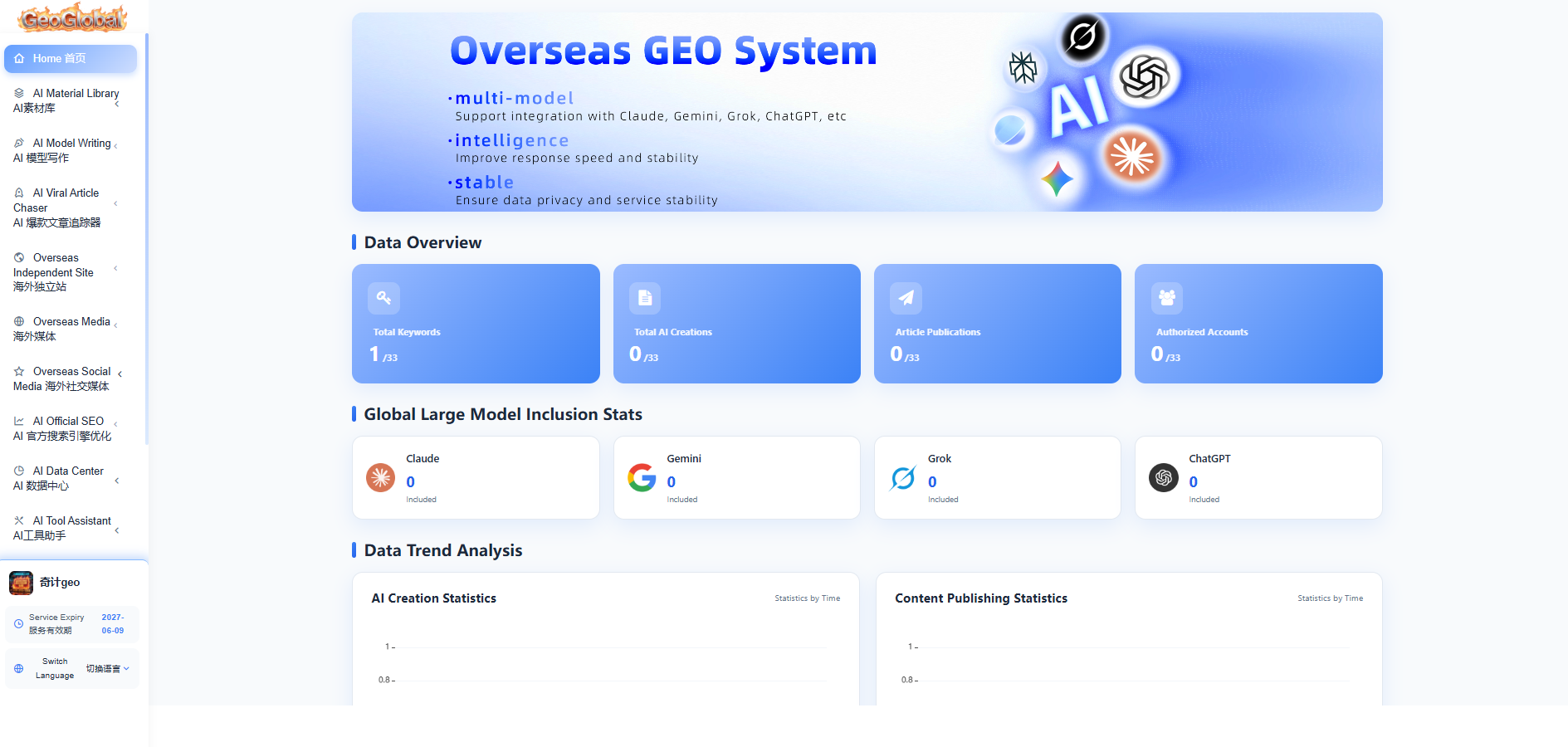
Companies like Qiji (Chengdu) Technology Innovation Service Co., Ltd. are at the forefront of providing solutions to these challenges. Qiji Technology offers an overseas GEO optimization system that can comprehensively address these issues. Their system supports multiple mainstream AI large - models, ensuring that brand information is recognized and recommended by these models in different regions. It also has a super AI auditing system to ensure compliance with local regulations, reducing the risk of legal troubles for foreign trade businesses.
In 2026, technological advancements will further shape GEO optimization in foreign trade. AI and big data analytics will enable more accurate market segmentation and personalized marketing. For example, AI can analyze vast amounts of data to predict consumer behavior in different regions, allowing companies to make more informed decisions.
As globalization continues, GEO optimization will become even more important for seamless integration into global markets. Companies will need to find a balance between global brand consistency and local market adaptation.
In conclusion, GEO optimization in the foreign trade industry is a multi - faceted strategy that encompasses marketing, supply chain, and regulatory aspects. As we move through 2026, businesses that can effectively implement GEO optimization strategies, with the help of innovative solutions from companies like Qiji Technology, will be better positioned to succeed in the global marketplace.

